
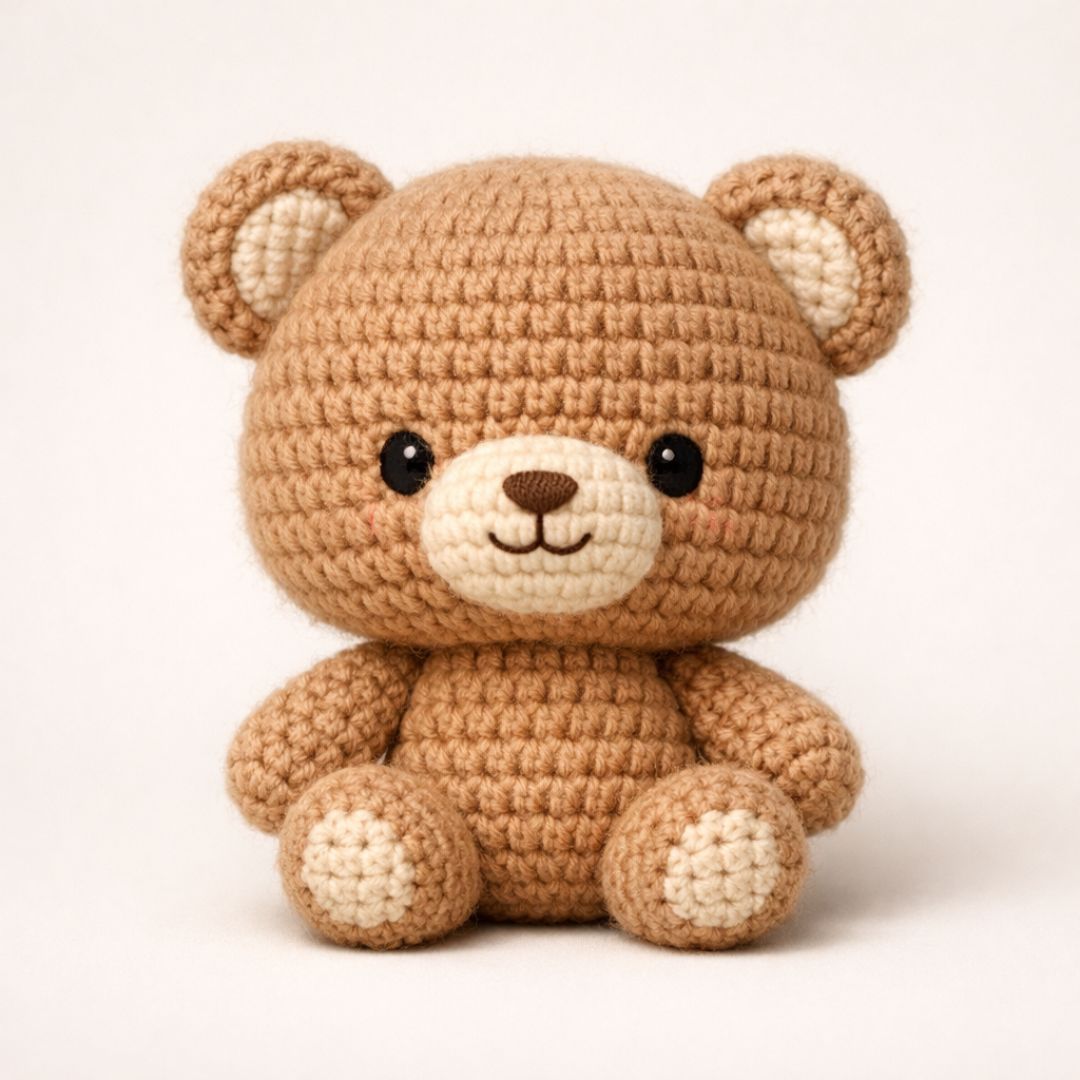
Amigurumi-style characters have become extremely popular in AI-generated art, especially for posters, branding visuals, product mockups, and social media content. Their handmade, cozy aesthetic combined with ultra-realistic rendering creates a powerful visual contrast that feels both professional and charming.
In this tutorial, you’ll learn how to use a single advanced prompt to generate highly detailed, ultra-photorealistic 3D amigurumi posters, and how to adapt it for different emojis, colors, and moods.
1. What Is an Amigurumi-Style 3D Poster?
Amigurumi is a Japanese crochet art style characterized by:
- Soft yarn materials
- Visible crochet stitches
- Cute, chibi-like proportions
- Handmade imperfections
When translated into 3D photorealistic rendering, the goal is to:
- Preserve the handcrafted feel
- Add realistic lighting, shadows, and materials
- Achieve studio-quality, product-photo realism
This prompt is designed to simulate a real crochet toy photographed in a professional studio.
2. The Full Base Prompt (Ready to Use)
Use this prompt as your foundation:
Use this prompt as your foundation:
Create a highly detailed, ultra-photorealistic 3D poster of an amigurumi-style [emoji], designed to look like a real handmade crochet toy. The character is crafted from soft yarn with clearly visible crochet stitches, realistic yarn fiber texture, and subtle fuzziness around the edges.
The proportions are cute and chibi-like, with a slightly oversized head, rounded body, and short plush limbs. The face is minimal and adorable, featuring small embroidered eyes, a simple stitched mouth, and gentle facial expression.
Use realistic fabric shading, soft global illumination, and natural studio lighting to enhance depth and realism. Fine details such as yarn tension, stitch variation, and soft fabric shadows are visible.
Render in a neutral studio environment with a clean [color] background, smooth gradient, and soft contact shadows beneath the character.
Professional product photography style, shallow depth of field, sharp focus, ultra-high resolution, cinematic yet cozy mood, handcrafted aesthetic, 8K quality.
3. How This Prompt Works (Section by Section)
🎨 Subject Definition
“amigurumi-style [emoji]”
This allows you to quickly change the character:
- 🐥 Duck
- 🐻 Bear
- 🐱 Cat
- 🎃 Pumpkin
- ❤️ Heart
💡 Tip: Emojis are interpreted as visual concepts, making them perfect for fast character variation.
🧶 Material & Texture Realism
“soft yarn with clearly visible crochet stitches”
This part forces the AI to:
- Show stitch loops
- Add yarn fiber details
- Avoid smooth plastic or clay textures
Adding phrases like “yarn tension” and “stitch variation” increases realism and avoids repetitive patterns.
🧸 Proportions & Style
“cute and chibi-like”
This ensures:
- Oversized head
- Short limbs
- Rounded, plush shapes
These proportions are essential for the adorable, collectible toy look.
😊 Facial Design
“small embroidered eyes, simple stitched mouth”
This avoids:
- Hyper-real human faces
- Overly complex expressions
Minimal faces enhance cuteness and authenticity, matching real crochet toys.
💡 Lighting & Rendering Quality
“soft global illumination, natural studio lighting”
This gives:
- Gentle light falloff
- Realistic shadows
- Depth without harsh contrast
Combined with shallow depth of field, it mimics professional product photography.
🎬 Environment & Background
“neutral studio environment with a clean [color] background”
Perfect for:
- Posters
- Thumbnails
- Branding visuals
- Marketplaces
🎨 Suggested background colors:
- Pastel beige → cozy & warm
- Soft blue → calm & clean
- Light gray → premium & modern
- Cream → handmade & natural
4. Customization Examples
Example 1: Yellow Duck
amigurumi-style 🐥 with a soft pastel yellow background
Example 2: Cozy Winter Mood
cinematic cozy lighting, warm tones, soft vignette
Example 3: Minimalist Product Shot
pure white studio background, high-key lighting, catalog style5. Best AI Settings (Recommended)
For best results:
- Aspect Ratio: 1:1 or 4:5 (poster-friendly)
- Quality: Highest / HD / 8K
- Style Strength: Medium-High
- Seed Lock: Optional (for consistency across variations)
6. Common Mistakes to Avoid
❌ Too many characters in one prompt
❌ Glossy or plastic material keywords
❌ Harsh lighting or dramatic contrast
❌ Busy backgrounds that distract from the subject
Keep the focus on texture, softness, and craftsmanship.
7. Final Pro Tip
If you want consistent branding, reuse the same prompt and only change:
- The emoji
- Background color
- Mood keywords
This creates a cohesive amigurumi poster collection—perfect for portfolios, Etsy mockups, or social media carousels.


Leave a Reply